

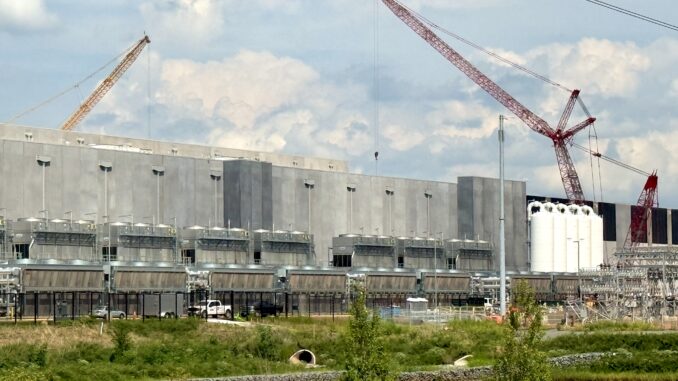
IMPOSSIBLE TO IGNORE
By Chris Wadsworth
Patricia Gallardo admits she wasn’t really focused on data centers over the past 15 years or so. She and her husband, Chris, moved into the Broadlands neighborhood in 2011 and thoroughly enjoyed the community and the Loudoun County lifestyle.
“I think most residents were busy living their lives, raising their children and trusting that our elected officials were making decisions in the community’s best interest – me included,” Gallardo said. “Then, almost without realizing it, [data centers] became impossible to ignore.”
Gallardo is not alone. Across Ashburn and the wider Loudoun community, it feels as though a switch has suddenly been thrown. For years, data centers were tolerated and even celebrated for the tax revenues they generated. The main complaint seemed to be about their aesthetics. But now an increasing number of residents are expressing concerns about noise from cooling systems, pollution from backup generators, increases in energy demands and – most visibly – their proximity to residential neighborhoods.
“We’re seeing industrial-scale development immediately adjacent to neighborhoods, schools, parks and walking trails,” Gallardo said. “That’s a very different situation than what people originally expected.”
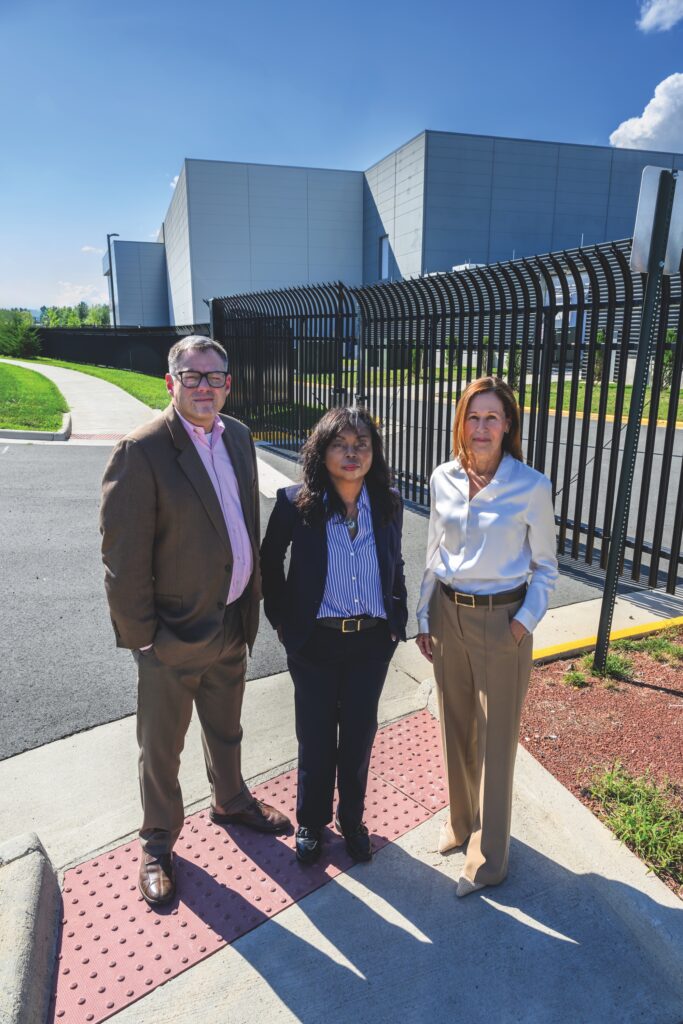
In July, a town hall meeting on data centers called by Loudoun Board of Supervisors Chair Phyllis Randall attracted so many people – close to 200 – that every seat in the room was taken and the crowd spilled into a nearby overflow room.
Over the past year or so, data centers and community concerns about them have become front page news across the country. A lot of it is full-throated NIMBYism – “not in my backyard.” Neighbors and residents are pushing back against data centers being built near them.
“It’s basically part of a multi-county, statewide and national reaction to unchecked and unregulated data center growth,” said Juli Briskman, who represents the Algonkian District on the Loudoun board. Briskman has become a leading voice on the data center issue – so much so that she recently announced she is running for the chair of the Loudoun board based heavily on fighting against data center expansion.
“We are finding that Loudon did not get its arms around [data center growth] early enough. And they are now encroaching on communities,” Briskman added.
Indeed, a motion to make some data centers a special exception – meaning county supervisors would have to approve them and have some control over where and how they were built – was shut down in 2019 by then-members of the board. The move to make data centers special exceptions was finally approved four years later – in 2023.
ENCROACHMENT
As Patricia Gallardo said, at one time, it seemed as though data centers were mostly in remote industrial areas along vacant stretches of Old Ox Road or Loudoun County Parkway, far from the hubbub of daily life. But that has changed.
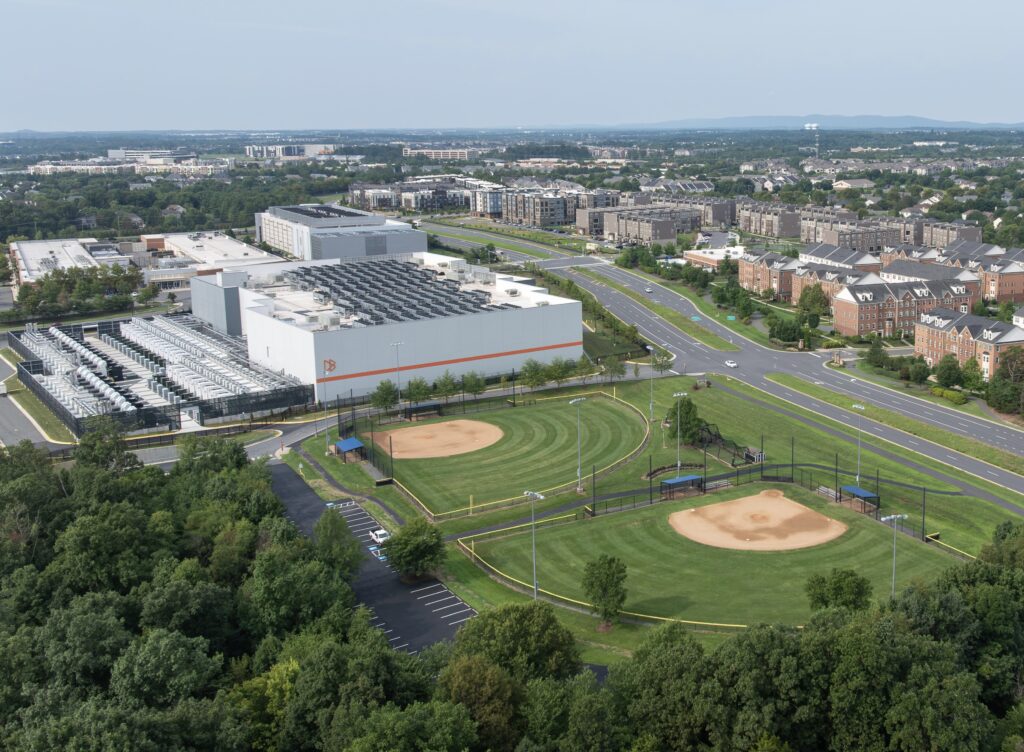
Take the entrance to Discovery Elementary School off Ashburn Village Boulevard. There you’ll find the Chick Ford & Ryan Bickel Fields. Kids swinging bats and running bases on the park’s two diamonds literally do so in the shadow of the Databank data center no more than a foul ball away.
A few miles south, the developers of Brambleton built The Barn at Brambleton, a bucolic event center with immaculately groomed grounds for weddings and special events. But looming on the horizon to the south is a massive “hyperscale” data center under construction.
And then there is The Regency, a neighborhood of grand homes tucked between Waxpool Road and Shellhorn Road that seems to have data centers approaching from several sides. Residents Ashburn Magazine spoke with say they can hear a steady hum from the data centers all day and all night. According to media reports, the 143 homeowners have been offered a massive buyout to purchase the entire neighborhood and turn it into a data center campus. However, that proposal is reportedly stalled because it requires the support of 100% of the community.
NIMBY
Daniel Golding knows a thing or two about data centers. He’s been an engineering executive in the data center industry for 25 years and is currently chief technology officer for ASG, an Ashburn-based advisory firm focused on global data center development.
He’s also an Ashburn homeowner, living in the Loudoun Valley Estates 2 neighborhood with his wife, Lauren, and their two children. He understands the concerns about data centers getting too close to residential areas and believes both county officials and local homeowners are – in part – to blame.
“These are two issues which run together – zoning and the incredible resistance of the county and residents to allow housing to be built,” Golding said. “It’s impossible to get a [housing] site plan approved through the county because the neighbors protest. Some of these processes drag on for years before the developers give up and build data centers. The other issue was a series of zoning problems where people would buy land and believe they could legally build data centers there ‘by right.’ If the zoning had been done properly, that never would have happened.”
A perfect example of that might be the CyrusOne data center project proposed for roughly 58 acres at the intersection of Belmont Ridge Road and Broadlands Boulevard. Originally, there was a proposal to build a hospital facility at the site. However, neighbors in the area voiced concern – too much traffic, potential noise – and the plan was nixed.
Then a plan was put together to build a townhome community on the land. That also prompted protests from residents in the area – impact on schools, not enough infrastructure for that many new people, etc.
So now, the developers are seeking to put up a data center because the land is technically already zoned for that – they don’t have to obtain anyone’s permission to build it.
“Many people – when they purchase a home and see that there is a beautiful, wooded area right across from them – they don’t want to see that change,” said Loudoun County Supervisor Sylvia Glass, whose district includes neighborhoods near the CyrusOne property. “Unfortunately, it is someone else’s property. If residents come out saying they don’t want something to happen, the [property owners] may pull back on that application and just decide to build something they know they can build without any issues.”
THE VANGUARD
Ashburn is often referred to as the “data center capital of the world” – and it has received a lot of attention in the national media as a result, especially recently as the general mood around data centers changes.
In mid-August, the Gray Lady herself – The New York Times – published a report about Loudoun and Ashburn with the headline: “A County Got Rich From Data Centers. Some Question ‘At What Cost?’”
This reputation and the “data center capital” moniker – the very fact that Ashburn was so far ahead of the curve – may very well have contributed to the current situation. There weren’t other data center-centric communities to learn from.
“There are certainly places where, looking at them today, the Board of Supervisors might make different land-use decisions than were made years ago,” said Buddy Rizer, the executive director of Loudoun County Economic Development. “Loudoun was one of the first communities in the country to experience data center development at this scale. The industry changed, the buildings changed, the community grew, and our understanding of appropriate land-use relationships evolved as well.”
Another factor that has raised ire is the infrastructure to support data centers. Multiple electrical substations have been built in the county, and huge towers supporting electrical lines now pepper Ashburn’s horizon.
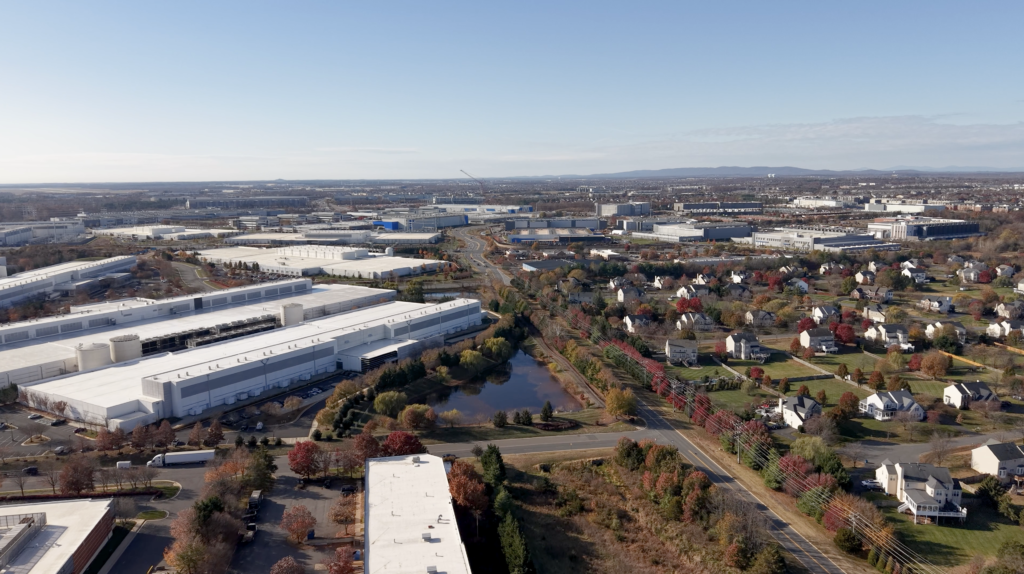
According to county data, more than 53 million square feet worth of data centers are in operation or being built. There are more than 200 data centers in the county so far, with scores more in the pipeline. “Data center capital of the world” isn’t just lip service.
But will that title last? There are plenty of signs that the tide may be turning.
“Loudoun is entering a different chapter,” Rizer said. “Our department has not been actively trying to attract data centers for many years now. We are entirely focused on continuing to diversify the economy, developing our Metro-connected opportunities, attracting new industries and investment, supporting entrepreneurs and existing businesses, and preserving the qualities that make Loudoun a great place to live and work.”
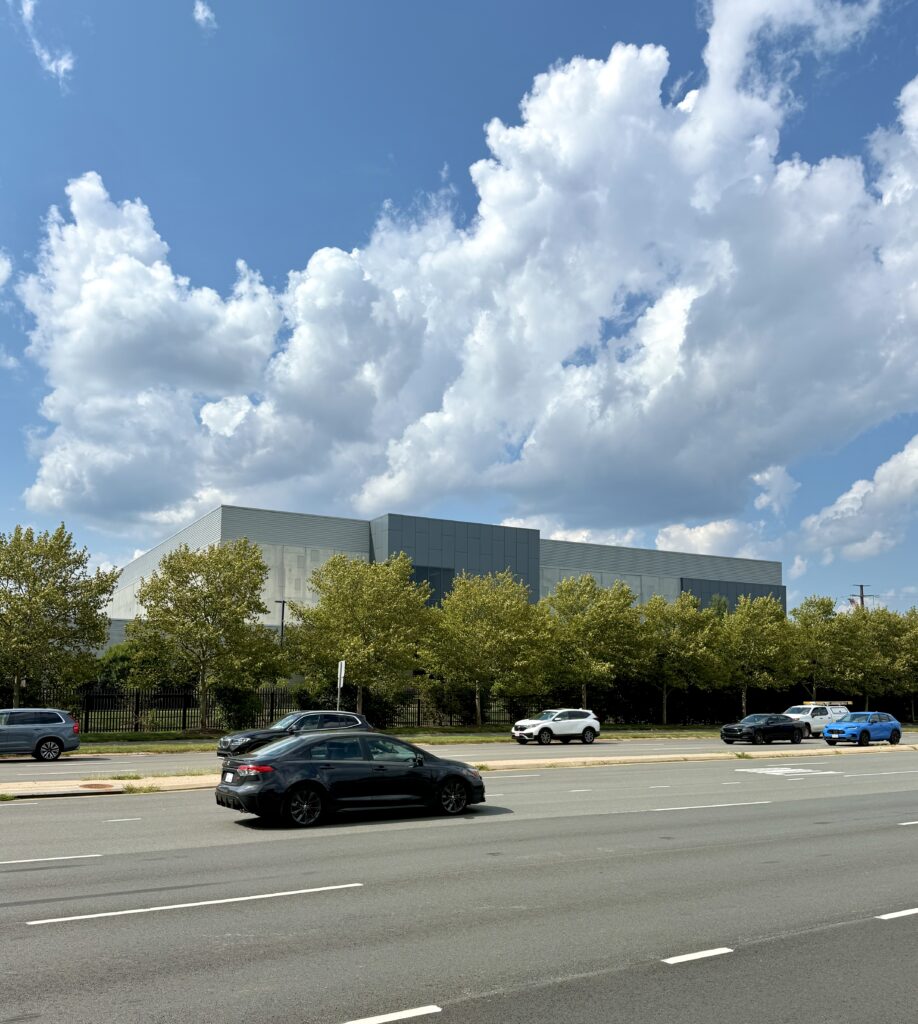
Nevertheless, discussions are afoot about a temporary moratorium on additional data center construction – despite many arguing that it would be illegal.
Another option being explored is undoing the so-called “grandfather clause” that allowed landowners and developers to file paperwork ensuring they would have the option to build a data center in the future even while Loudoun leaders tightened restrictions. The proposal, from Briskman and fellow Supervisor Laura A. TeKrony, would probably face legal challenges if enacted.
“This isn’t about being anti-technology,” said Gallardo, who is advocating for a pause in new data center construction. “It’s about responsible planning, transparency and making sure economic development never comes at the expense of the health, safety and quality of life of
the people who call Loudoun County home.”
INSIDE A DATA CENTER
Back in 2019, Ashburn Magazine took readers inside a data center to learn more about what happens behind the gates and high walls. You can see that report here.